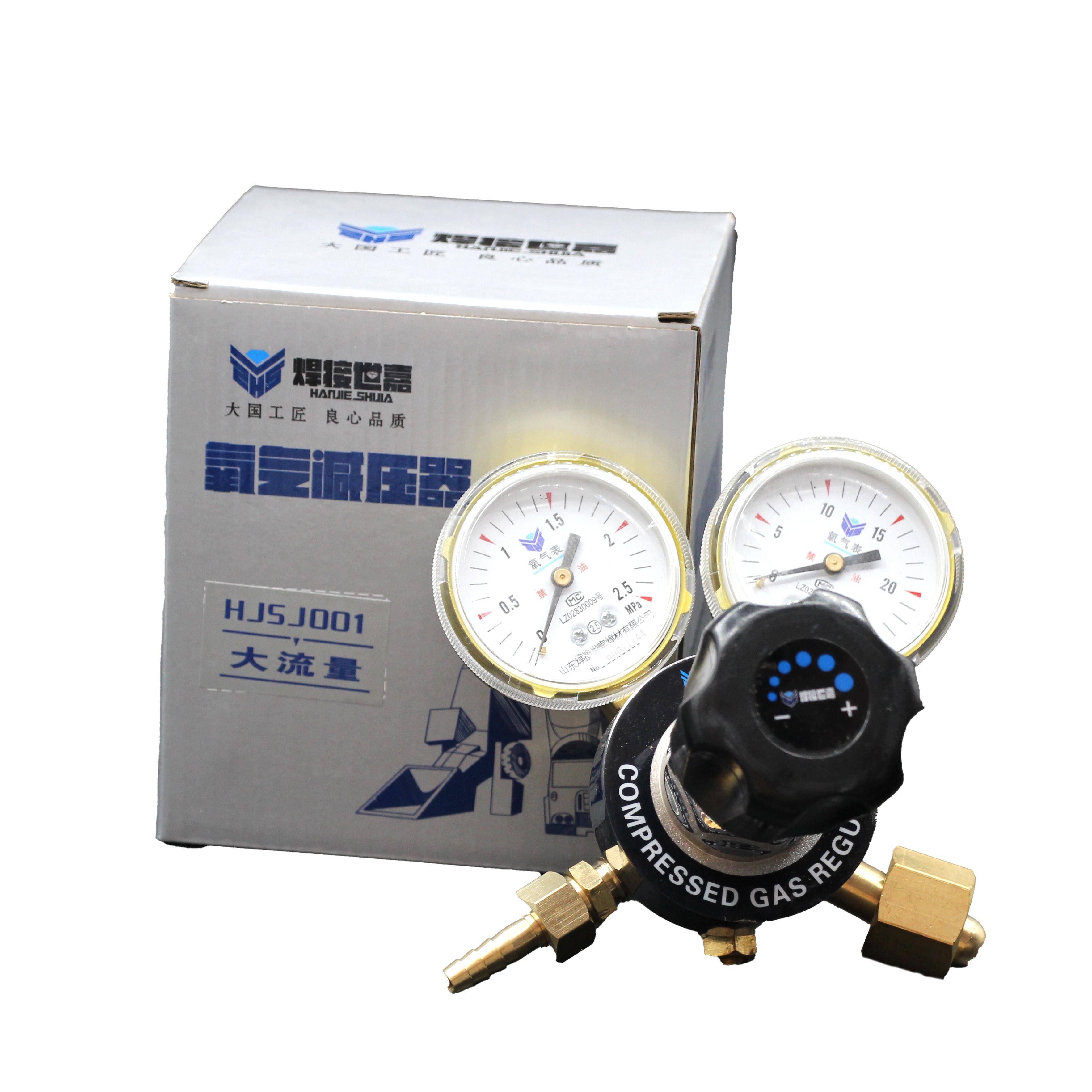

Weldynasty HJSJ001 Oxygen Regulator Copper with 60MPa Forged Brass Body, External Safety Valve & Explosion-Proof Gauge
The Weldynasty 001 Series Oxygen Pressure Regulator is a high-performance device designed for industrial welding, cutting, and gas welding. Featuring a forged brass body, a radial gold-powder explosion-proof pressure gauge, and an external safety valve, it precisely reduces high-pressure oxygen to a stable working output for accurate gas flow and pressure control.
Key Features
Forged Brass Body: Withstands pressure stress exceeding 60 MPa for exceptional durability.
Dual Visual Safety Protection: Gold-powder explosion-proof gauge housing with impact-resistant lens.
High-Flow Anti-Self-Flow Structure: Ensures smooth gas delivery and extended service life.
Precision Inlet Nut: Hot-forged brass, 35 MPa rated, endures 50,000 assembly cycles without stripping.
Copper Powder Metallurgy Filter: Built into the inlet connector for unobstructed gas flow.
High-Durability Diaphragm and Spring: Both tested to 25,000 fatigue cycles for smooth regulation.
External Safety Valve: Sensitive, accurate response to abnormal pressure rise.
UL-Standard Pressure Gauge: Passed 130% overpressure and 3,600 fatigue tests; shock-resistant and accurate.
Specifications
| Parameter | Specification |
|---|---|
| Gas Type | Oxygen |
| Series | 001 Series |
| Body Material | Premium forged brass |
| Body Pressure Resistance | >60 MPa |
| Inlet Nut Pressure Resistance | 35 MPa |
| Diaphragm / Spring Life | 25,000 cycles |
| Safety Valve Type | External |
| Pressure Gauge Standard | UL Safety Standard |
| Inlet Connection | G5/8" RH |
| Outlet Connection | M16×1.5 RH |
Note: For outlet pressure range and gauge range, refer to the product nameplate or contact customer service.
Usage Instructions / Operating Notes
Before Installation
Ensure the cylinder is upright and secured. Never open the valve on an unsecured cylinder.
Check the valve and inlet for oil, dust, or moisture. Stop if oil is found.
Briefly open the cylinder valve to blow out contaminants before installation.
Installation and Leak Testing
Turn the adjusting screw counterclockwise until fully loosened before installation.
Connect the inlet nut to the cylinder valve outlet and tighten securely.
Slowly open the cylinder valve and check the high-pressure gauge. Do not stand in front of or behind the regulator.
Apply soapy water to all connections and confirm no leaks before use.
Pressure Adjustment
Slowly turn the adjusting screw clockwise until the low-pressure gauge reaches the desired pressure.
If pressure is too high, loosen the screw to release gas, then readjust.
Never exceed the red warning value on the low-pressure gauge.
After Use
Close the cylinder valve first.
Release residual gas until the low-pressure gauge returns to zero.
Turn the adjusting screw counterclockwise to restore the spring to its free state.
Applications / Ideal For
Gas Welding: Stable oxygen supply for welding torches on carbon steel, stainless steel, and more.
Gas Cutting: Provides required oxygen pressure and flow for cutting torches.
Industrial Manufacturing and Repair: Suitable for metalworking shops, machinery manufacturing, and shipbuilding.
Pipeline Installation and Maintenance: Reliable pressure regulation for on-site welding and cutting.
FAQ
A: Designed exclusively for oxygen. Never use with acetylene, propane, hydrogen, or other combustible gases.
Q: Why must oil and grease be kept away from oxygen regulators?
A: Oil and hydrocarbons can spontaneously ignite or explode on contact with high-pressure oxygen. Always ensure the regulator and connections are completely oil-free.
Q: How do I know if the regulator needs repair or replacement?
A: Stop use if gas leaks from connections, the gauge does not return to zero, pressure cannot be adjusted continuously, the safety valve leaks, the gauge is damaged, or the body is severely corroded.
Q: What if the regulator freezes during use?
A: Thaw with hot water or steam. Never use open flame.
Q: What position should the adjusting screw be in before opening the cylinder valve?
A: Turn it fully counterclockwise so the spring is in its free state. Otherwise, instantaneous high pressure may damage the diaphragm and cause injury.
Q: What is the function of the safety valve?
A: It automatically releases pressure when outlet pressure exceeds 1.15–1.5 times the maximum output, then closes once pressure returns to a safe range.
Q: Does the regulator require periodic maintenance?
A: Yes. Annual professional inspection is recommended, and pressure gauges should be calibrated regularly.