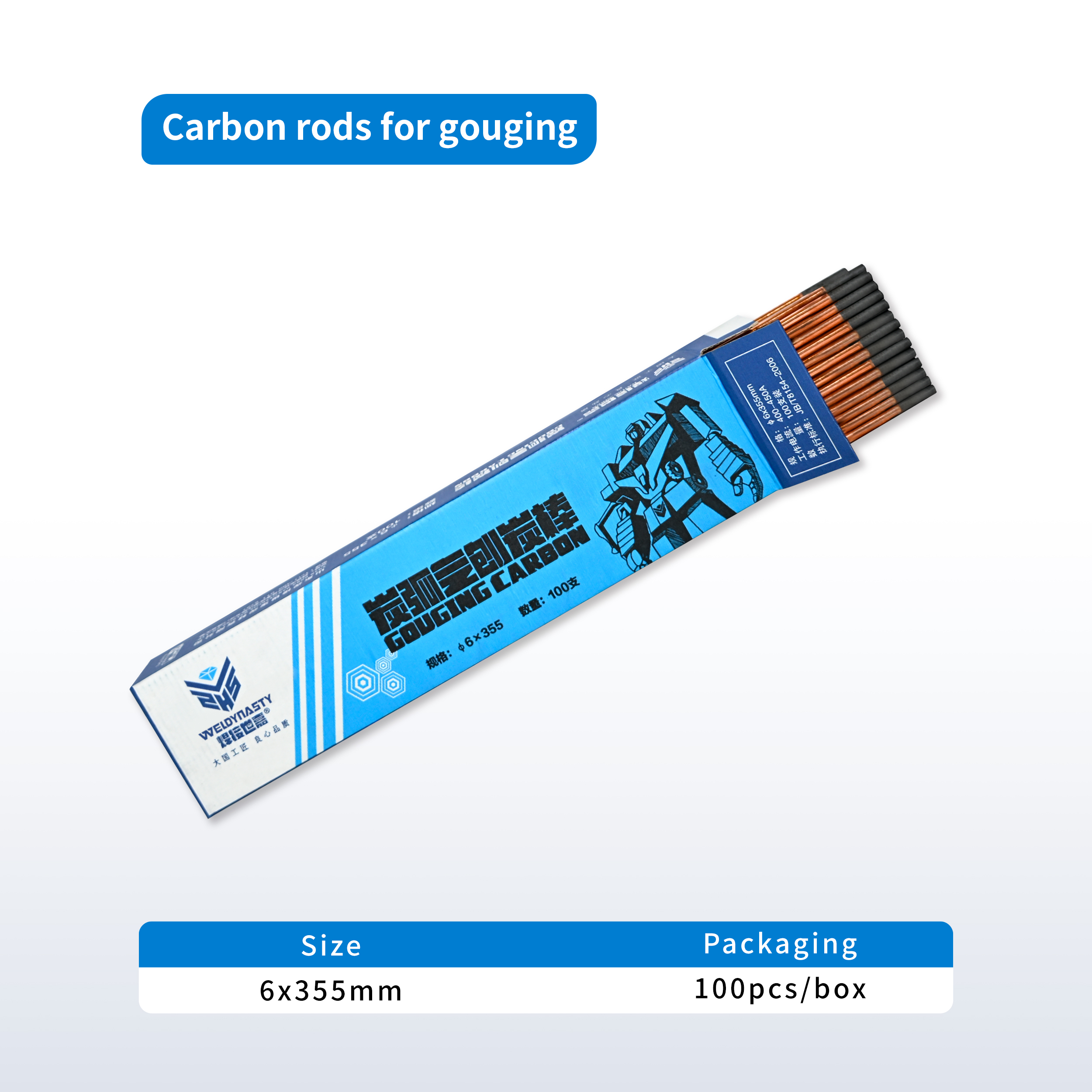


Power source: Use with a standard DC welding machine and a compatible air-arc gouging torch; set current according to the 6 mm rod diameter.
Air supply: Maintain a steady, adequate compressed-air flow behind the arc to blow away molten metal and keep the groove clean.
Technique: Hold the rod at a shallow angle to the workpiece and feed steadily; adjust travel speed to control groove depth and width.
Safety first: Always wear appropriate PPE (welding helmet with proper shade, gloves, flame-resistant clothing, and eye/ear protection). Ensure good ventilation, as gouging produces smoke and sparks.
Surface prep: Clean the workpiece of paint, oil, and heavy rust before gouging for best results.
Storage: Store rods in a dry place to prevent moisture absorption and preserve performance.
Removing welding defects, spatter, and old welds
Cutting and grooving cast iron, carbon steels, and manganese steels
Preparing U-grooves for welding and repairing cracks in equipment
Maintenance, repair, and fabrication work in shipbuilding, railway, steel plants, bridge construction, and heavy machinery manufacturing
FAQ
Q1: What is air-arc gouging, and how do these rods work?
A: Air-arc gouging uses a carbon electrode (the gouging rod) to melt metal with an electric arc while a compressed-air jet blows the molten metal away. This creates clean grooves and removes defects quickly and precisely.
Q2: What size is this rod, and what does it suit?
A: This is a round 6 × 355 mm rod—a larger-diameter size suited to deeper grooves and faster metal removal on common steels and cast iron.
Q3: Do I need special equipment?
A: You need a standard DC welding machine, an air-arc gouging torch, and a compressed-air supply. No specialized power source is required.
Q4: Is it really better than pneumatic chiseling?
A: Yes—air-arc gouging typically removes metal faster, produces a smoother finish, reduces noise, and improves working conditions compared with manual chiseling.
Q5: Will gouging damage the base metal?
A: When used correctly, the process does not harm the base metal's properties, helping preserve structural performance.
Q6: What materials can I use it on?
A: It is well suited to cast iron, carbon steels, and manganese steels, and is widely used in shipbuilding, railway, steel plants, bridge construction, and heavy machinery manufacturing.
Q7: Do you offer OEM/ODM and different packing options?
A: Yes—OEM/ODM is available, and packing can be customized. Please contact us for details.