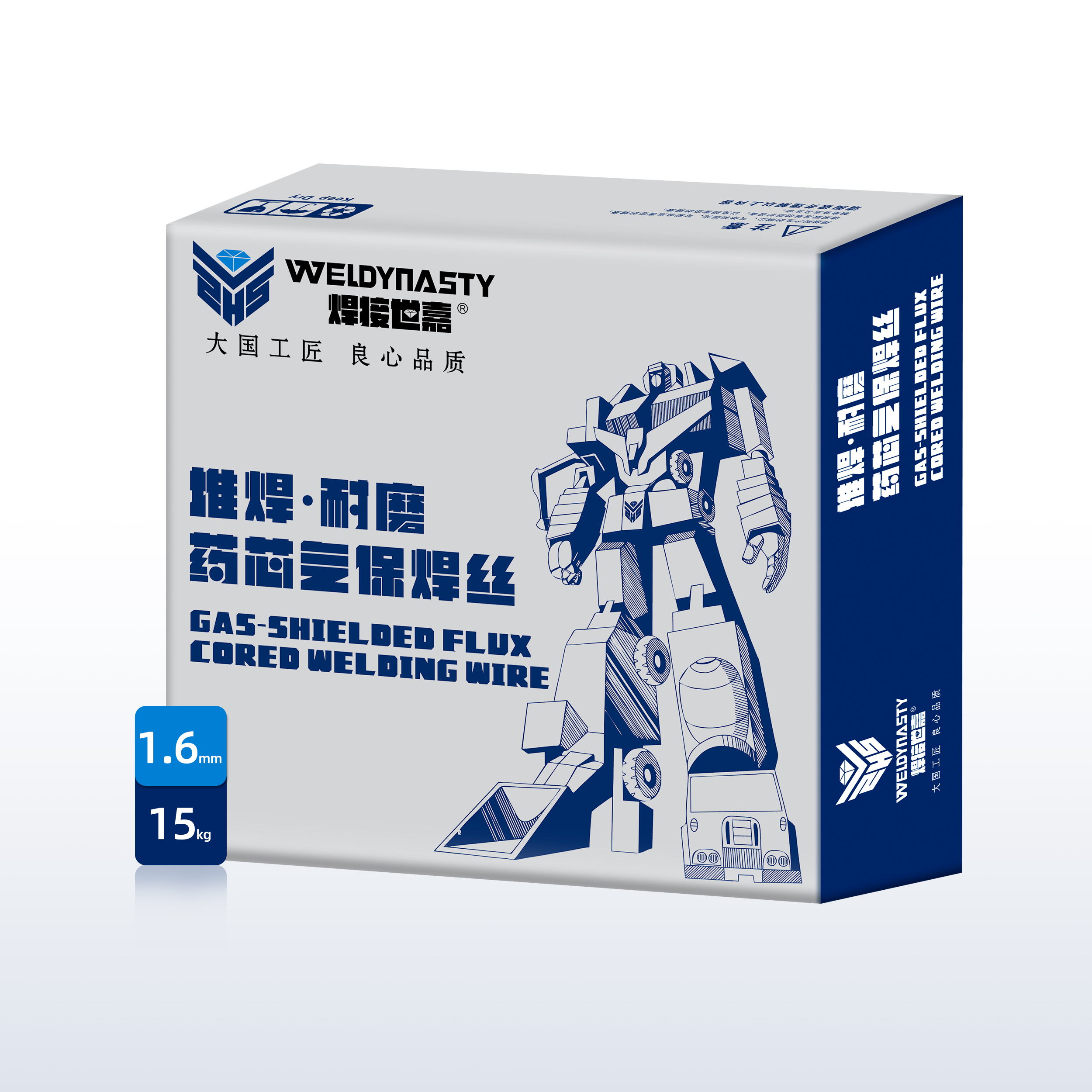

YD212 Gas-Shielded Flux-Cored Surfacing Wire – Stable Arc, Crack-Resistant, Wear-Resistant
YD212 is a CO₂ gas-shielded flux-cored surfacing wire of chromium-molybdenum type. It is designed for surfacing and repair of worn machine parts. The wire provides a stable arc, low spatter, good bead formation, easy slag removal, and good crack resistance. The deposited surfacing layer has uniform and stable hardness and good wear resistance.
Key Features
Stable Arc, Low Spatter, Good Formation & Easy Slag Removal
YD212 delivers a stable welding arc, low spatter, good bead appearance, and easy slag removal, supporting efficient single-layer and multi-layer surfacing repair.
Good Crack Resistance Performance
The wire has good crack resistance. With proper welding procedures, no cracks are observed after welding. In general surfacing practice, preheating and slow cooling are the primary methods used to prevent cracking.
Uniform, Stable Surfacing Hardness & Good Wear Resistance
The deposited metal has uniform and stable surfacing hardness and good wear resistance, making it suitable for worn parts subject to abrasion.
Cost-Effective Repair by Surfacing
Surfacing is a fast and economical method for repairing worn or corroded workpieces and for improving wear, corrosion, and heat resistance. YD212 is intended for single-layer or multi-layer repair of worn machine-part surfaces.
Specifications
Typical Chemical Composition (%)
| C | Cr | Mn |
| 0.30–0.60 | ≤5.00 | ≤4.00 |
Surfacing Layer Hardness: HRC ≥50
Type: Gas-shielded flux-cored surfacing wire; chromium-molybdenum type
Polarity: DC+
Shielding Gas: 100% CO₂
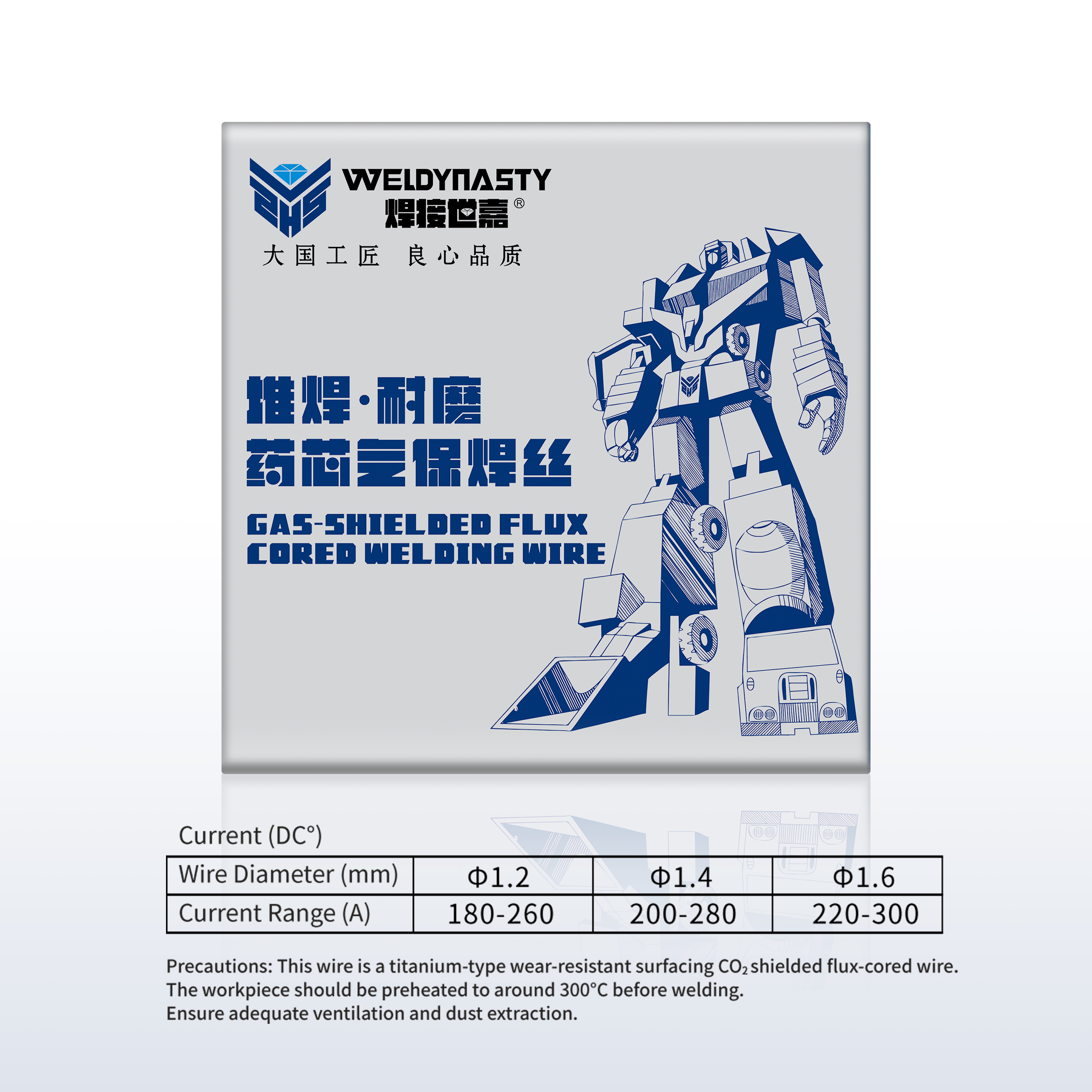
Available Diameters: Φ1.2, Φ1.4, Φ1.6 mm
Packaging: 15 kg/spool (standard); other packaging formats available per requirement
Operating Notes
Before welding, remove rust, oil, moisture, and other impurities from the workpiece.
Use DC reverse polarity.
CO₂ gas flow rate should be 20–25 L/min.
Wire extension should be controlled within 15–25 mm.
Preheating and interpass temperature are recommended at around 300°C.
Ideal For
Suitable for components subjected to impact and severe wear. Commonly used for single-layer or multi-layer overlay welding to repair the surfaces of various wear-prone components, such as gears, dredging buckets, mining machinery, coal washing machine cutting teeth, and wear-resistant liners.